


Hey there! As a supplier of China Poly Iso Butene, I often get asked about the melting point of this product. So, I thought I'd take a moment to dive into this topic and share some insights with you all.
First off, let's talk a bit about what Poly Iso Butene is. Poly Iso Butene, also known as Polyisobutylene (PIB), is a synthetic polymer made from the polymerization of isobutylene. It's a versatile material that has a wide range of applications in various industries. You can find it in products like lubricants, adhesives, sealants, and even in some personal care items.
Now, getting to the main question - what's the melting point of China Poly Iso Butene? Well, the melting point of Poly Iso Butene isn't a fixed value. It depends on a few factors, mainly the molecular weight of the polymer. There are different grades of Poly Iso Butene with varying molecular weights, and each grade has its own melting range.
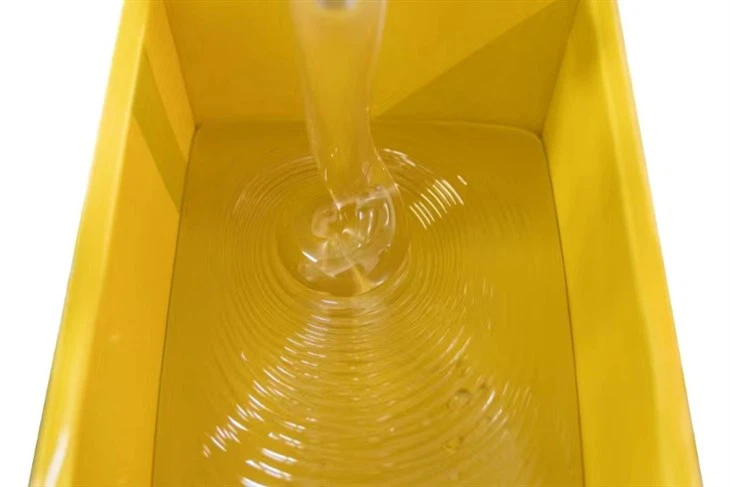
Low molecular weight Poly Iso Butene is usually in a liquid state at room temperature. These low - MW grades are quite fluid, and they don't really have a distinct melting point like a solid substance. Instead, they have a viscosity - temperature relationship. As you heat them up, their viscosity decreases, making them flow more easily.
On the other hand, medium and high molecular weight Poly Iso Butene are more like solids or semi - solids at room temperature. For medium molecular weight grades, the melting range can be anywhere from around 40°C to 80°C. High molecular weight Poly Iso Butene may have a melting range starting from around 80°C and going up to 120°C or even higher in some cases.
The reason for this variation in melting points based on molecular weight is related to the structure of the polymer. Higher molecular weight polymers have longer chains. These longer chains are more entangled with each other, and it takes more energy (higher temperature) to break these entanglements and make the polymer flow. In contrast, lower molecular weight polymers have shorter chains that can move more freely, so they don't require as much heat to become fluid.
Let me give you an example of how these different grades are used in real - world applications. For instance, in the production of Polyisobutylene For Insulated Glass Sealant, medium molecular weight Poly Iso Butene is often used. The melting range of this grade allows it to be easily processed during the sealant manufacturing process. When heated within its melting range, it can be mixed with other components like fillers and additives to form a homogeneous sealant mixture. Once it cools down, it solidifies and provides a good seal for the insulated glass.
Another application is in the film industry. MB - 15 Polyisobutylene for Film is a specific grade that offers certain properties due to its molecular weight and melting characteristics. The melting point of this grade enables it to be incorporated into the film - making process. During the extrusion or casting of the film, the Poly Iso Butene can melt and blend with other polymers to enhance the film's flexibility, adhesion, and other performance properties.
And for sealants, MB - 10 Polyisobutylene for Sealents is a popular choice. Its melting range is carefully selected to ensure that it can be applied easily at an appropriate temperature and then set to form a durable seal. This is crucial in applications where the sealant needs to withstand different environmental conditions, such as temperature changes and exposure to moisture.
As a supplier of China Poly Iso Butene, I understand the importance of providing the right grade for your specific application. That's why we offer a wide range of Poly Iso Butene products with different molecular weights and melting points. Whether you're in the automotive industry, the construction sector, or the consumer goods market, we can help you find the perfect Poly Iso Butene solution.
If you're interested in learning more about our Poly Iso Butene products or have any questions regarding the melting points and which grade would be best for your application, don't hesitate to reach out. We're here to assist you in making the right choice and ensuring that you get the highest - quality product for your needs. Let's start a conversation about how we can work together to meet your Poly Iso Butene requirements.
References

- "Polymer Science and Technology" textbooks
- Industry reports on Polyisobutylene applications and properties


