

Hey there! As a Poly Iso Butene supplier, I'm super stoked to take you behind the scenes and show you how this amazing product is made. Poly Iso Butene, also known as PIB, is a versatile synthetic rubber-like polymer that's used in a whole bunch of industries. From adhesives to lubricants, it's got a wide range of applications. So, let's dive right in and explore the production process!
Starting with the Raw Materials
The first step in making Poly Iso Butene is gathering the raw materials. The main ingredient is isobutylene, which is a hydrocarbon gas. Isobutylene is usually obtained from the refining of crude oil or natural gas. It's a key building block for PIB because it contains the carbon and hydrogen atoms that will form the polymer chain.
In addition to isobutylene, a catalyst is needed to kickstart the polymerization process. The most commonly used catalyst is aluminum chloride (AlCl₃). This catalyst helps to break the double bonds in the isobutylene molecules and allows them to link together to form a long chain.
The Polymerization Process
Once we have our raw materials, it's time to start the polymerization process. This is where the magic happens! The process typically takes place in a large reactor vessel, which is carefully controlled to maintain the right temperature and pressure.
First, the isobutylene gas is fed into the reactor. Then, the catalyst is added in a specific ratio to initiate the reaction. The reaction is exothermic, which means it releases heat. So, we need to make sure we have a good cooling system in place to keep the temperature under control.
As the reaction progresses, the isobutylene molecules start to link together to form chains of varying lengths. The length of these chains determines the properties of the final Poly Iso Butene product. For example, shorter chains result in a more fluid and low-viscosity PIB, while longer chains produce a more viscous and rubber-like material.
Controlling the Reaction
To get the desired properties of the Poly Iso Butene, we need to carefully control the reaction conditions. This includes adjusting the temperature, pressure, and the amount of catalyst used. By fine-tuning these parameters, we can produce PIB with different molecular weights and viscosities.

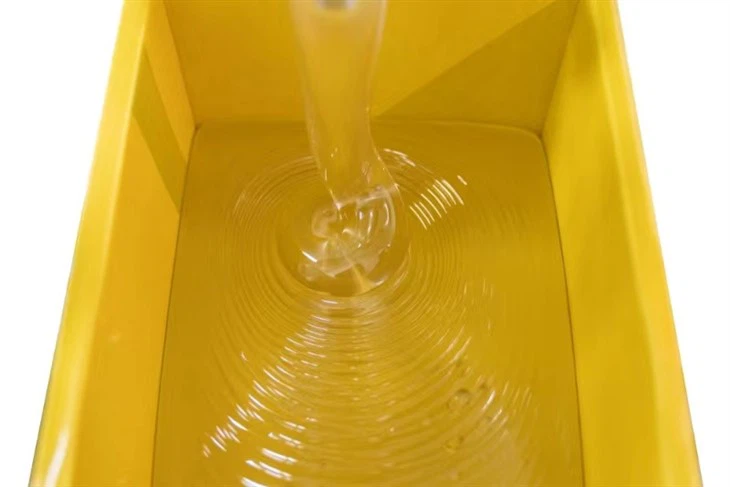
For instance, if we want to make a high-viscosity PIB for use in adhesives, we might increase the reaction time and use a higher amount of catalyst. On the other hand, if we need a low-viscosity PIB for lubricants, we can shorten the reaction time and reduce the catalyst concentration.
Separating and Purifying the Product
Once the polymerization reaction is complete, the next step is to separate the Poly Iso Butene from the unreacted isobutylene and the catalyst. This is usually done through a series of distillation and filtration processes.
First, the mixture is heated to vaporize the unreacted isobutylene, which can then be condensed and recycled for future use. Next, the remaining liquid is filtered to remove any solid impurities, such as the catalyst residues.
After that, the Poly Iso Butene may undergo further purification steps, such as washing with solvents or treating with activated carbon. These steps help to remove any remaining impurities and improve the quality of the final product.
Testing and Quality Control
Before the Poly Iso Butene is ready to be shipped to our customers, it goes through a rigorous testing and quality control process. We test the product for various properties, including viscosity, molecular weight, color, and odor.
We use state-of-the-art equipment and techniques to ensure that our PIB meets the highest standards of quality. This includes using gel permeation chromatography (GPC) to measure the molecular weight distribution and viscometers to determine the viscosity.
If the product passes all the tests, it is then packaged and labeled according to the customer's specifications. We offer a range of packaging options, from small drums to large bulk containers, to meet the different needs of our clients.
Applications of Poly Iso Butene
Now that you know how Poly Iso Butene is produced, let's take a look at some of its many applications. As I mentioned earlier, PIB is a very versatile material that's used in a wide variety of industries.
- Adhesives: Poly Iso Butene is commonly used in adhesives because of its excellent tack and adhesion properties. It can be used to make pressure-sensitive adhesives, hot-melt adhesives, and rubber-based adhesives. Check out our MB-10 Polyisobutylene for Sealents which is great for this application.
- Lubricants: PIB is also used in lubricants to improve their viscosity and reduce friction. It can be added to engine oils, gear oils, and hydraulic fluids to enhance their performance.
- Sealants: In the construction and automotive industries, Poly Iso Butene is used to make sealants for windows, doors, and other joints. It provides a flexible and durable seal that can withstand extreme temperatures and weather conditions. Our Polyisobutylene For Insulated Glass Sealant is a great option for this purpose.
- Films: PIB can be used to make films with excellent barrier properties. These films are often used in packaging applications to protect products from moisture, oxygen, and other contaminants. Take a look at our MB-15 Polyisobutylene for Film for more details.
Conclusion
Well, that's a wrap on how Poly Iso Butene is produced! As you can see, it's a complex and carefully controlled process that requires a lot of expertise and technology. At our company, we're committed to producing high-quality PIB that meets the needs of our customers.
If you're interested in learning more about our Poly Iso Butene products or have any questions about the production process, feel free to reach out to us. We'd love to have a chat and discuss how we can help you with your specific requirements. Whether you're in the adhesive, lubricant, sealant, or film industry, we've got the right PIB solution for you. So, don't hesitate to contact us and let's start a conversation about your next project!
References
- Polymer Science: A Comprehensive Reference, Volume 2, edited by Krzysztof Matyjaszewski and Thomas P. Davis
- Handbook of Adhesive Technology, Second Edition, edited by Andrew Pizzi and K. L. Mittal