

What is the hardness of polyisobutene?
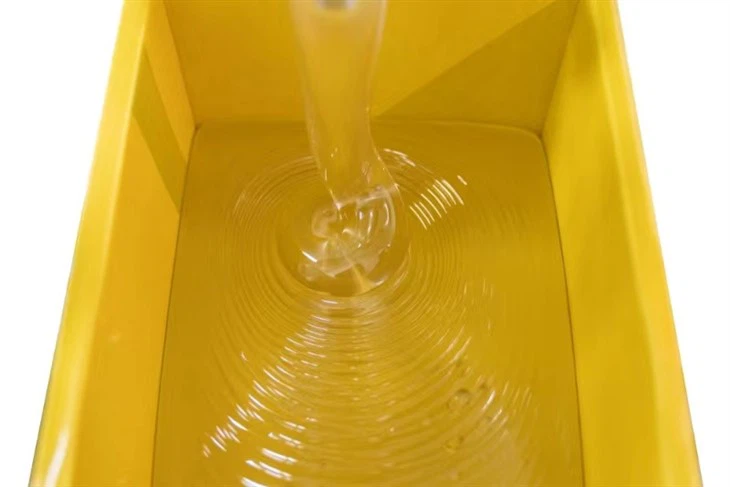

Polyisobutene, often abbreviated as PIB, is a synthetic polymer derived from the polymerization of isobutene. It is a versatile material with a wide range of applications across various industries, including adhesives, lubricants, sealants, and chewing gum bases. One of the key properties of polyisobutene that influences its performance in these applications is its hardness. In this blog, we will explore what the hardness of polyisobutene means, how it is measured, and how it impacts the use of polyisobutene in different products. As a polyisobutene supplier, we have in - depth knowledge of this material and are here to share our expertise.
Understanding the Concept of Hardness in Polyisobutene
Hardness in polymers, including polyisobutene, refers to the material's resistance to indentation, scratching, or deformation under an applied force. It is a complex property that is influenced by several factors, such as the molecular weight, molecular structure, and degree of cross - linking of the polymer.
Polyisobutene can have a wide range of hardness values depending on its molecular weight. Generally, low - molecular - weight polyisobutenes are more viscous and less hard, often appearing as a liquid or semi - liquid state. They flow easily and have a high degree of flexibility. On the other hand, high - molecular - weight polyisobutenes are more solid - like, with higher hardness and less flexibility.
Measuring the Hardness of Polyisobutene
There are several methods to measure the hardness of polymers, and the choice of method depends on the nature of the polyisobutene sample.
Penetration Test
This is a common method for measuring the hardness of semi - solid or viscous polyisobutenes. In a penetration test, a weighted needle or cone is allowed to penetrate the polyisobutene sample for a specified time under a controlled temperature. The depth of penetration is then measured, and the hardness is inversely related to the penetration depth. A lower penetration depth indicates a harder polyisobutene.
Shore Hardness Test
The Shore hardness test is widely used for measuring the hardness of elastomeric and rubber - like materials, including some high - molecular - weight polyisobutenes. There are different Shore scales, such as Shore A and Shore D. The Shore A scale is used for softer materials, while the Shore D scale is for harder ones. A durometer with a specific indenter is pressed into the polyisobutene sample, and the hardness is read directly from the durometer.
Dynamic Mechanical Analysis (DMA)
DMA measures the viscoelastic properties of polyisobutene as a function of temperature, frequency, and stress. By analyzing the storage modulus (G') and loss modulus (G''), we can gain insights into the material's hardness and its behavior under different conditions. A higher storage modulus generally indicates a harder and more elastic material.
Impact of Polyisobutene Hardness on Applications
Chewing Gum Bases
In the chewing gum industry, the hardness of polyisobutene plays a crucial role. MB - 12 Medium molecular weight Polyisobutylene for Gum Base is a popular choice. A medium - hardness polyisobutene provides the right balance of elasticity and chewability. If the polyisobutene is too hard, the gum will be difficult to chew and may have an unpleasant texture. Conversely, if it is too soft, the gum will lose its shape quickly and may stick to teeth or other surfaces.
Sealants
For sealant applications, such as Polyisobutylene For Insulated Glass Sealant, the hardness of polyisobutene affects the sealant's ability to fill gaps, adhere to surfaces, and resist deformation. A harder polyisobutene can provide better structural support and resistance to external forces, such as pressure and vibration. For example, MB - 10 Polyisobutylene for Sealents is formulated with an appropriate hardness to ensure a reliable seal in various sealing applications.
Lubricants
In lubricant formulations, the hardness of polyisobutene can impact its viscosity and film - forming properties. A softer polyisobutene may be more suitable for applications where low - viscosity lubrication is required, while a harder one can provide better load - bearing capacity and protection against wear.
Controlling the Hardness of Polyisobutene
As a polyisobutene supplier, we have the ability to control the hardness of our products through various manufacturing processes.
Molecular Weight Control
By adjusting the reaction conditions during polymerization, such as the temperature, pressure, and catalyst concentration, we can control the molecular weight of polyisobutene. Higher molecular weights generally result in harder polymers, while lower molecular weights lead to softer ones.
Blending
We can also blend polyisobutenes of different molecular weights or with other polymers to achieve the desired hardness. Blending allows us to fine - tune the properties of the final product and meet the specific requirements of different applications.
Conclusion
The hardness of polyisobutene is a critical property that affects its performance in a wide range of applications. Understanding the concept of hardness, how it is measured, and how it impacts different products is essential for both manufacturers and end - users. As a polyisobutene supplier, we are committed to providing high - quality products with precisely controlled hardness to meet the diverse needs of our customers.
If you are interested in purchasing polyisobutene for your specific application, we invite you to contact us for further discussion and negotiation. We have a team of experts who can provide detailed technical support and help you choose the most suitable polyisobutene product.
References
- Sperling, L. H. (2006). Introduction to Physical Polymer Science. Wiley - Interscience.
- Mark, J. E. (Ed.). (2007). Physical Properties of Polymers Handbook. Springer.