

Hey there! As a polyisobutene supplier, I often get asked about the elastic modulus of polyisobutene. So, I thought I'd take a deep - dive into this topic and share what I know.
First off, let's talk a bit about polyisobutene itself. Polyisobutene is a synthetic polymer that's got a wide range of applications. It's used in sealants, films, gum bases, and a whole bunch of other products. For instance, MB - 10 Polyisobutylene for Sealents is great for making sealants that can withstand different environmental conditions. And MB - 15 Polyisobutylene for Film is used to create high - quality films. Also, MB - 12 Medium molecular weight Polyisobutylene for Gum Base is an essential ingredient in chewing gum.
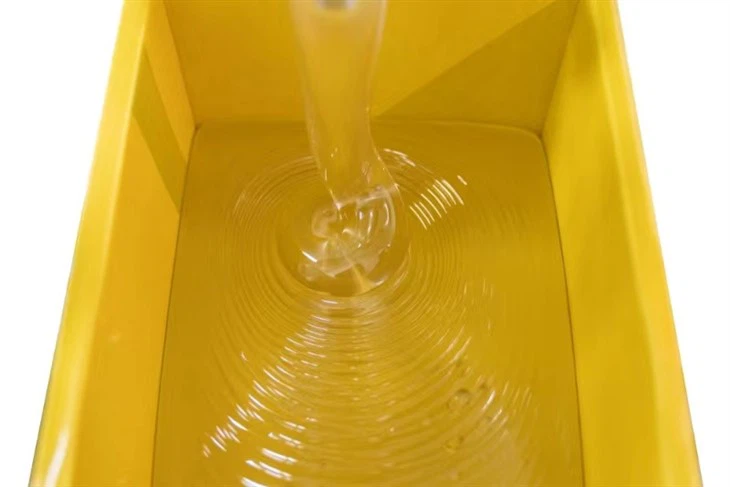

Now, let's get to the main question: What is the elastic modulus of polyisobutene? The elastic modulus, also known as Young's modulus, is a measure of a material's stiffness. It tells us how much a material will deform under a given amount of stress. In simpler terms, if you pull or push on a piece of polyisobutene, the elastic modulus will show how much it'll stretch or compress.
The elastic modulus of polyisobutene can vary quite a bit, and that's mainly due to factors like its molecular weight, degree of cross - linking, and temperature.
Molecular weight plays a huge role. Generally, as the molecular weight of polyisobutene increases, its elastic modulus also goes up. Higher molecular weight polyisobutenes have longer polymer chains. These long chains are more entangled with each other, which makes it harder for the material to deform. So, they tend to be stiffer and have a higher elastic modulus. For example, a high - molecular - weight polyisobutene used in industrial applications where high stiffness is required will have a significantly higher elastic modulus compared to a low - molecular - weight one used in more flexible products.
The degree of cross - linking is another important factor. Cross - linking is like creating bridges between the polymer chains. When polyisobutene is cross - linked, the chains are held together more tightly. This restricts their movement and makes the material stiffer. So, a highly cross - linked polyisobutene will have a much higher elastic modulus than a non - cross - linked or lightly cross - linked one.
Temperature also has a big impact on the elastic modulus of polyisobutene. At lower temperatures, the polymer chains have less energy, and they're more restricted in their movement. This makes the material stiffer, and the elastic modulus is higher. As the temperature rises, the chains gain more energy and can move more freely. This causes the material to become more flexible, and the elastic modulus decreases.
To measure the elastic modulus of polyisobutene, we usually use a tensile test. In a tensile test, a sample of polyisobutene is pulled at a constant rate until it breaks. During this process, we measure the force applied and the resulting deformation. By plotting the stress (force per unit area) against the strain (deformation), we can calculate the slope of the linear part of the curve, which gives us the elastic modulus.
In most cases, the elastic modulus of polyisobutene ranges from a few hundred pascals to several megapascals. But again, this is a very rough estimate because of the factors I mentioned earlier.
Let's think about the real - world implications of the elastic modulus of polyisobutene. In the sealant industry, a sealant made from polyisobutene with a suitable elastic modulus can effectively fill gaps and prevent the entry of air, water, or other substances. If the elastic modulus is too low, the sealant might not hold its shape well and could easily be displaced. On the other hand, if it's too high, the sealant might be too rigid and crack under stress.
In the film - making industry, the elastic modulus affects the flexibility and durability of the film. A film with the right elastic modulus will be able to stretch without breaking and maintain its integrity during handling and use.
For gum bases, the elastic modulus determines the chewiness of the gum. A polyisobutene with an appropriate elastic modulus will give the gum a nice, long - lasting chew and the right texture.
As a polyisobutene supplier, I understand the importance of getting the elastic modulus right for different applications. That's why we offer a variety of polyisobutene products with different molecular weights and degrees of cross - linking. This allows our customers to choose the product that best suits their specific needs.
If you're in the market for polyisobutene and need a product with a particular elastic modulus for your application, don't hesitate to reach out. We can help you select the right product and provide all the technical support you need. Whether you're making sealants, films, or gum bases, we've got the polyisobutene solutions for you.
In conclusion, the elastic modulus of polyisobutene is a complex property that's influenced by multiple factors. Understanding these factors can help you choose the right polyisobutene for your project. If you have any questions or want to discuss your polyisobutene requirements, just drop us a line. We're here to assist you in finding the perfect polyisobutene solution for your business.
References
- "Polymer Science and Engineering" by Donald R. Paul and L. H. Sperling
- Journal articles on polymer properties and applications in the field of polyisobutene