


Hey there! As a supplier of China Poly Iso Butene, I'm super excited to chat with you about its surface tension properties. You might be wondering, "What on earth is surface tension, and why should I care about it when it comes to Poly Iso Butene?" Well, stick around, and I'll break it all down for you.

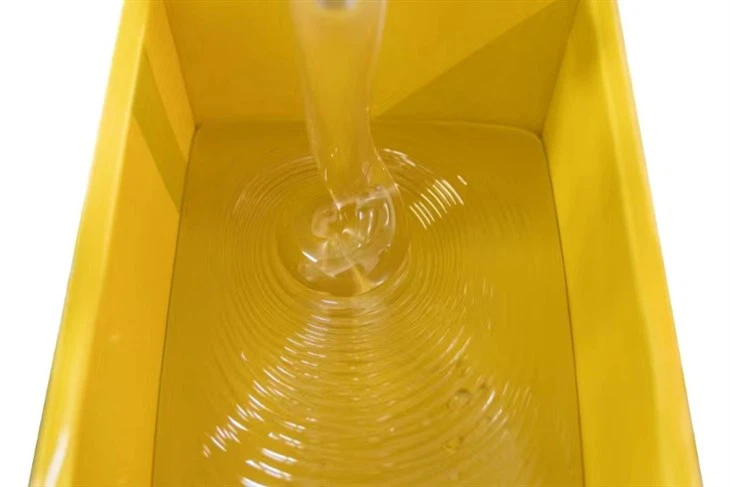
First things first, let's talk about what surface tension is. In simple terms, surface tension is like an invisible elastic skin that forms on the surface of a liquid. It's caused by the cohesive forces between the molecules in the liquid. These forces pull the molecules at the surface together, creating a kind of "skin" that resists being broken. You can think of it like a trampoline - the molecules are the springs, and the surface is the fabric. The stronger the springs (cohesive forces), the more difficult it is to break through the fabric (surface).
Now, let's get into the nitty - gritty of how surface tension works with China Poly Iso Butene. Poly Iso Butene is a synthetic polymer with some really unique properties. Its surface tension properties play a crucial role in a variety of applications.
One of the key things about the surface tension of Poly Iso Butene is its low surface energy. Low surface energy means that it doesn't like to stick to other materials easily. This is great for applications where you don't want the Poly Iso Butene to adhere to everything it comes into contact with. For example, in the production of Polyisobutylene For Insulated Glass Sealant, the low surface tension helps the sealant to form a smooth, non - sticky surface. This is important because it allows the insulated glass to be easily handled during the manufacturing process without the sealant getting stuck to tools or other surfaces.
Another interesting aspect of the surface tension of Poly Iso Butene is its ability to spread evenly. When you apply Poly Iso Butene to a surface, it tends to spread out in a thin, uniform layer. This is due to the balance between the cohesive forces within the Poly Iso Butene and the adhesive forces between the Poly Iso Butene and the surface. In applications like lubricants, this even spreading is essential. A lubricant with good spreading properties can cover a larger area, reducing friction and wear on the moving parts.
The surface tension of Poly Iso Butene also affects its compatibility with other substances. Since it has a low surface energy, it can be blended with other materials that have similar surface properties. This makes it a versatile ingredient in many formulations. For instance, in the production of MB - 12 Medium molecular weight Polyisobutylene for Gum Base, the surface tension of Poly Iso Butene allows it to mix well with other ingredients in the gum base, creating a smooth and consistent texture.
In addition, the surface tension of Poly Iso Butene can be adjusted by changing its molecular weight. Higher molecular weight Poly Iso Butene generally has a higher surface tension. This can be useful in different applications. For example, in MB - 10 Polyisobutylene for Sealents, a higher surface tension can provide better adhesion and sealing properties. The higher surface tension means that the sealant can better wet the surfaces it is applied to, creating a stronger bond.
Let's also consider the impact of temperature on the surface tension of Poly Iso Butene. Like most liquids, the surface tension of Poly Iso Butene decreases as the temperature increases. This is because as the temperature rises, the molecules in the Poly Iso Butene gain more energy and move more freely. The cohesive forces between the molecules weaken, resulting in a lower surface tension. This temperature - dependent property can be both an advantage and a challenge. In some applications, such as in hot - melt adhesives, the decrease in surface tension at higher temperatures allows the adhesive to flow more easily and bond better to the surfaces. However, in applications where a consistent surface tension is required, temperature control becomes crucial.
Now, you might be thinking about how these surface tension properties translate into real - world benefits. Well, for manufacturers, the unique surface tension properties of China Poly Iso Butene mean better product performance and more efficient production processes. In the automotive industry, for example, Poly Iso Butene - based lubricants with the right surface tension can reduce engine wear and improve fuel efficiency. In the construction industry, sealants made with Poly Iso Butene can provide long - lasting and reliable sealing, thanks to their ability to wet surfaces and form strong bonds.
If you're in the market for high - quality China Poly Iso Butene, you've come to the right place. Our Poly Iso Butene products are carefully formulated to have the optimal surface tension properties for a wide range of applications. Whether you're looking for a low - surface - energy material for non - stick applications or a high - surface - tension product for better adhesion, we've got you covered.
If you're interested in learning more about our Poly Iso Butene products or have specific requirements for your application, don't hesitate to reach out. We're here to help you find the perfect solution for your business. Contact us today to start a conversation about how our China Poly Iso Butene can take your products to the next level.
References
- "Polymer Science: An Introduction" by Fred W. Billmeyer Jr.
- "Handbook of Adhesives and Sealants" edited by Henry S. Katz and Allan W. Miles


