

Hey there! I'm a supplier of Medium Molecular Weight Polyisobutylene, and today I wanna chat about how this awesome stuff performs in high - temperature environments.
First off, let's get a bit technical. Medium Molecular Weight Polyisobutylene is a polymer with a molecular weight range that gives it some unique properties. It's known for things like its excellent impermeability to gases, water resistance, and good adhesion. But when it comes to high - temperature situations, how does it hold up?
In high - temperature environments, the behavior of Medium Molecular Weight Polyisobutylene can be pretty complex. One of the key factors is its thermal stability. Generally, it has a relatively good thermal stability compared to some other polymers. This means that at moderately high temperatures, it can maintain its physical and chemical properties for a certain period.
For instance, at temperatures up to around 100 - 120 degrees Celsius, Medium Molecular Weight Polyisobutylene usually retains its shape and doesn't degrade rapidly. It can still provide a reliable seal, whether it's used in something like MB-12 Medium molecular weight Polyisobutylene for Gum Base. In gum base applications, even if the gum is stored in a hot environment for a short while, the polyisobutylene helps to keep the gum's structure intact, preventing it from melting or losing its elasticity too quickly.
However, as the temperature goes higher, say above 150 degrees Celsius, some changes start to happen. The polymer begins to soften. This softening is due to the increased thermal energy that allows the polymer chains to move more freely. In a sealing application, like in Polyisobutylene For Insulated Glass Sealant, if the glass is exposed to a high - sun area where the temperature inside the sealant can rise significantly, the softening of the polyisobutylene might cause a slight decrease in its sealing efficiency. But it doesn't mean it fails completely. It just might need some additional support or a different formulation to work optimally at these extreme temperatures.
One of the benefits of Medium Molecular Weight Polyisobutylene in high - temperature scenarios is its oxidation resistance. Oxidation can be a big problem for polymers in hot environments because it can lead to brittleness, cracking, and a loss of mechanical properties. Polyisobutylene has a relatively stable chemical structure that slows down the oxidation process. This means that even when exposed to oxygen at high temperatures, it takes a while for significant degradation to occur.
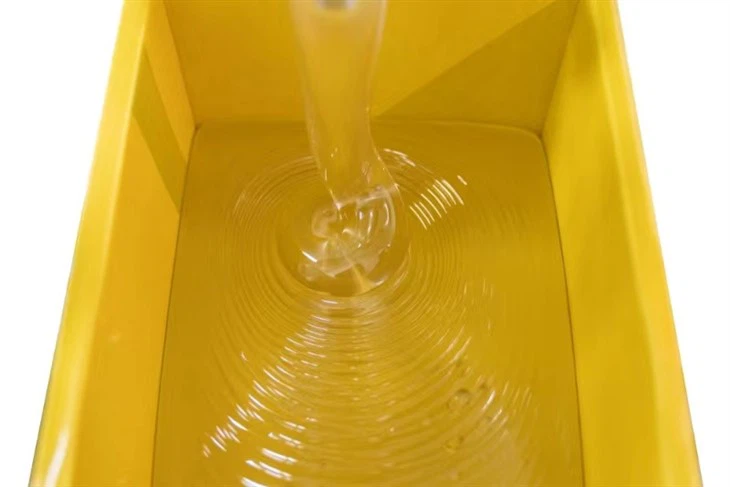
Another aspect is its viscosity - temperature relationship. As the temperature increases, the viscosity of Medium Molecular Weight Polyisobutylene decreases. This can be both an advantage and a disadvantage. In some industrial processes, such as when it's being used as a lubricant or a processing aid, the decrease in viscosity at high temperatures can make it easier to handle and mix with other substances. However, in applications where a high viscosity is required for proper functioning, like in MB-10 Polyisobutylene for Sealents, the drop in viscosity can be a concern. Manufacturers might need to add viscosity modifiers or use a combination of different grades of polyisobutylene to balance the viscosity at different temperatures.

Now, let's talk about some real - world examples. In the automotive industry, Medium Molecular Weight Polyisobutylene can be used in gaskets and seals. These parts are often exposed to high - temperature engine environments. The polyisobutylene's ability to maintain its sealing properties at elevated temperatures helps to prevent oil and coolant leaks. Even when the engine is running hot during long - distance drives or in heavy - traffic situations, the polyisobutylene - based gaskets can still do their job effectively.
In the construction industry, for roofing membranes and waterproofing applications, the high - temperature performance of Medium Molecular Weight Polyisobutylene is crucial. Roofs can get extremely hot under the sun, especially in summer. The polyisobutylene in the membranes helps to keep the roof waterproof and flexible. It doesn't become too brittle or too soft, which could lead to cracks or leaks.
If you're in an industry that requires materials to perform well in high - temperature environments, Medium Molecular Weight Polyisobutylene could be a great choice. But it's important to understand its limitations and work with the right experts to get the best results.
So, if you're interested in learning more about our Medium Molecular Weight Polyisobutylene products and how they can fit into your high - temperature applications, don't hesitate to reach out and contact us for a procurement discussion. We're here to help you find the perfect solution for your needs.
References
- Polymer Handbook, Fourth Edition, edited by J. Brandrup, E. H. Immergut, and E. A. Grulke
- Thermal Properties and Aging Behavior of Polyisobutylene - based Polymers, Journal of Polymer Science